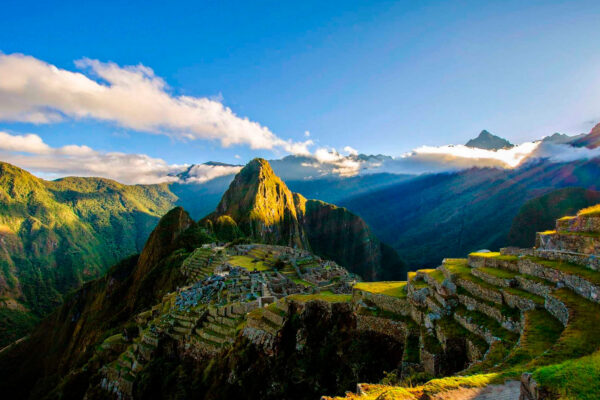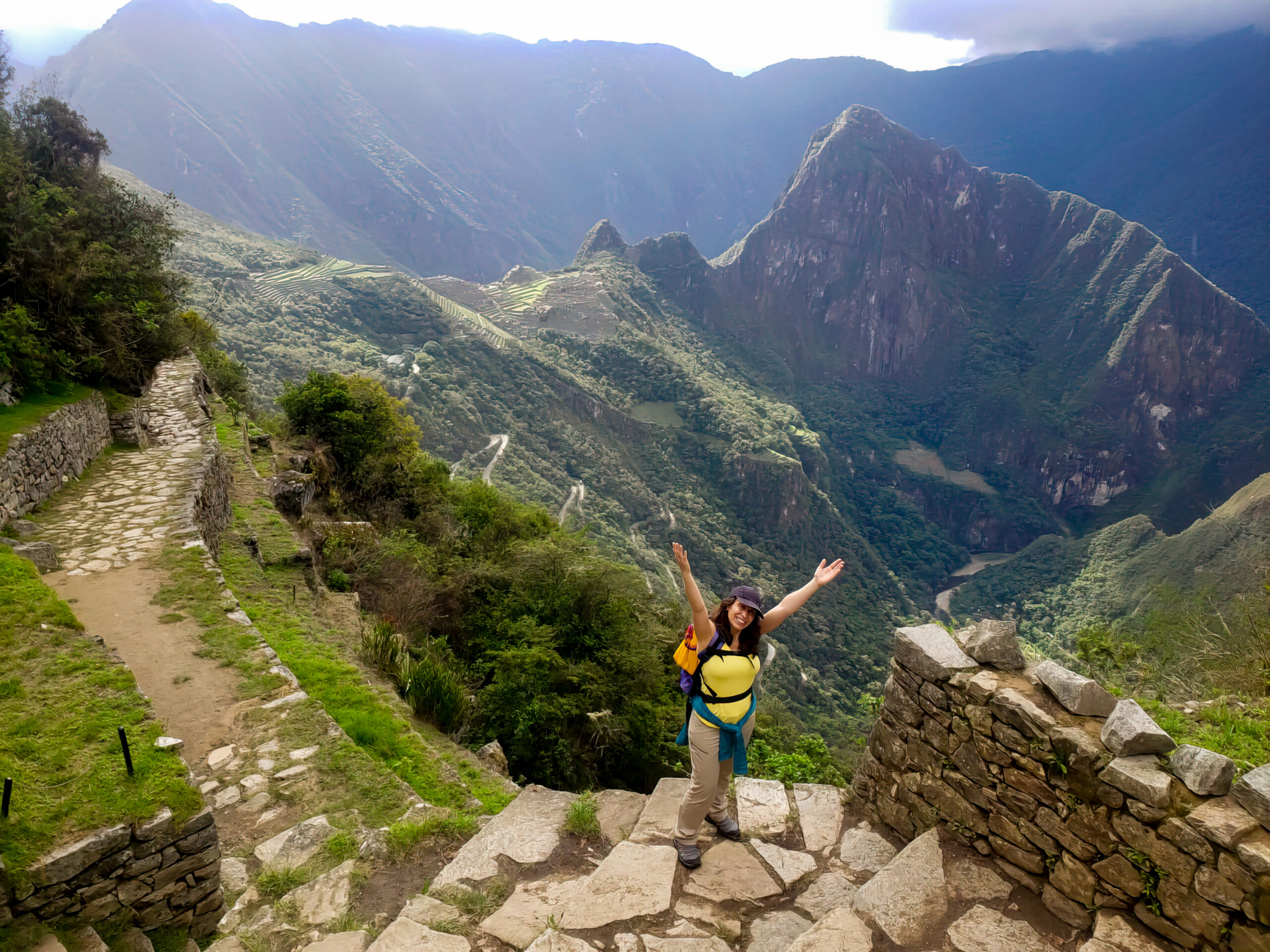
Walking for four days on stones laid by the Incas, crossing cloud forests and arriving at Machu Picchu at dawn through the Sun Gate: the classic Inca Trail is the dream of many travelers to Peru. It is also one of the most tightly regulated treks in the world, which is why it needs to be planned well in advance.
In this guide, as a local operator working in Cusco every day, we explain how permits work, how much it costs, what to expect day by day, and which alternatives to choose if you can’t get a spot.

What is the classic Inca Trail?
It is a section of the ancient Inca road network (Qhapaq Ñan) leading to Machu Picchu. The classic version lasts 4 days and 3 nights, covering about 42 km, and is rated moderate to challenging because of the Warmiwañusca pass, known as “Dead Woman’s Pass”. You start at Km 82 (Piscacucho), sleep in tents and reach Machu Picchu on day four through Inti Punku, the Sun Gate.
Along the way you pass archaeological sites such as Runkuraqay, Sayacmarca, Phuyupatamarca and Wiñay Wayna, and landscapes ranging from Andean valley to cloud forest.
Permits: why you need to book months ahead
This is the part that surprises first-time planners the most.
- There is no DIY permit: permits are sold only through operators authorized by the Ministry of Culture. The name on the permit must match your passport, and changes are very limited.
- The limit is 500 people per day, but that number includes guides, porters and cooks. Only about 200 spots a day are left for travelers.
- When to book: for high-season departures (May to September) plan to book about six months ahead, because permits sell out.
- When they are released: permits for each year are released in the autumn. For the following year, always ask your operator for up-to-date availability: calendars showing “all available” far in advance may be placeholders.
- The Inca Trail is closed every February for maintenance and environmental recovery. If you travel that month, Machu Picchu stays open (by train or via other treks), but the Inca Trail does not.
How much does the classic Inca Trail cost?
Prices vary a lot by operator and service level. In general:
| Option | Approximate cost per person |
|---|---|
| Classic Inca Trail, 4 days (group) | about USD 650-800, up to over USD 1,000 for mid-to-upper-range services |
| Short Inca Trail, 2 days / 1 night | about USD 560-650 |
Prices are indicative and should be confirmed with the operator before booking.
A package normally includes: permit, guide, cooks and porters, tents and camping equipment, meals, the Machu Picchu entrance ticket and the train back. It usually does not include: flights to Cusco, hotels before and after, sleeping bag and mat (available for rent), trekking poles, tips, and extra entrances such as Huayna Picchu.

How to judge an operator: ask how porters are treated and paid, what the weight limits on their packs are, how many travelers are in each group and how waste is handled. A price that is too low is almost always paid for on the shoulders of the people who work on the trail. For us at PerùEtico this is the most important part.
Day-by-day itinerary
Campsites vary slightly from operator to operator, but the pattern is this.
Day 1: Km 82 to Wayllabamba (about 3,000 m). A warm-up day: a fairly gentle path along the Urubamba River, the first Inca sites and the first night in a tent.
Day 2: Dead Woman’s Pass (about 4,200 m). The hardest day: a long climb to the highest point of the trail, then a steep descent to the Pacaymayo valley. Start slowly and let your guide set the pace.

Day 3: the most beautiful day. You pass Runkuraqay, Sayacmarca and Phuyupatamarca, with stretches of Inca staircases and cloud forest. You camp near Wiñay Wayna, the most evocative site on the route.

Day 4: Inti Punku and Machu Picchu. A very early wake-up, the last stretch to the Sun Gate and your first view of Machu Picchu. Then a guided visit, the descent to Aguas Calientes and the train back to Cusco.

When to go
- April-May and September-October: the best compromise between weather and crowds, with milder nights and fewer groups.
- June-August: dry season and clear skies, but also the busiest period, with very cold nights at altitude.
- November-March: rainy season, a muddier trail and a higher risk of bad weather. Even at other times of year, rain-triggered landslides can temporarily suspend entry to the trail, as happened in August 2026, with groups returning in September.
- February: closed.
How to prepare
- Altitude: arrive in Cusco at least 2-3 days early to acclimatize.
- Training: you don’t need to be an athlete, but regular walking in the weeks before helps, ideally with elevation gain and in the boots you will wear.
- What to bring: broken-in hiking boots, warm layers, a waterproof jacket, a headlamp, sun protection, a water bottle and trekking poles. A sleeping bag can be rented, but your own is more comfortable.
- Documents: your passport is required at the checkpoints, as it is for your Machu Picchu ticket.
- Insurance: travel insurance that covers high-altitude trekking is strongly recommended.
The 2-day Short Inca Trail: a good alternative
If you have less time or don’t want to sleep in a tent for several nights, there is the Short Inca Trail: it starts at Km 104, has a permit pool separate from the classic trail, and is easier to find with less notice. You sleep in a hotel in Aguas Calientes and arrive at Machu Picchu through the Sun Gate. You do miss the highest pass and part of the expedition feel of the classic trail.
If you can’t get permits: the alternatives
If your date is sold out or you travel in February, there are excellent treks that lead to Machu Picchu or to equally spectacular sites, without the daily permit system:
- Lares with Patacancha: the ethical trek that crosses Quechua communities and natural hot springs.
- Salkantay: a sacred mountain and high-altitude landscapes, with no daily permits.
- Choquequirao: the “twin of Machu Picchu”, more remote and quieter.
Frequently asked questions
Can I hike the Inca Trail without a guide? No. The classic trek is allowed only with authorized operators and a guide.
How hard is it? Moderate to challenging. Day 2, with the climb to the pass at about 4,200 m, is the one that tests you most.
Is the Machu Picchu ticket included? In full packages yes, but extra entrances such as Huayna Picchu are almost always separate. Read why you must buy your Machu Picchu ticket months in advance.
Can I do it with the family or with children? It depends on age and experience: for families with young children we often recommend the Short Inca Trail or a gentler alternative.
Book your Inca Trail with PerùEtico
We organize the classic Inca Trail and the Short Inca Trail with local guides, fairly treated and fairly paid porters, and small groups. Write to us with the dates you have in mind: we will tell you right away what is available and help you build your trip around the trek, between Cusco, the Sacred Valley and Machu Picchu.